Diabetes technology
Peer reviewed by Dr Colin Tidy, MRCGPAuthored by Lawrence HigginsOriginally published 17 Dec 2025
Meets Patient’s editorial guidelines
- DownloadDownload
- Share
- Language
- Discussion
Managing your diabetes requires much mental and physical effort, but technology can help ease some of your workload. Here we look at the technology that is available, what it does, and if it’s right for you.
In this article:
Continue reading below
How diabetes technology has made a difference
Whether it’s monitoring your blood sugars, delivering your insulin, or keeping on top of your physical and mental health - there are plenty of devices and apps to help you.
Dr Lisal Folsom, endocrinologist, with Wendy Novak Diabetes Institute, part of Norton Healthcare and Norton Children's, Kentucky, USA, says: “Technology has transformed diabetes care. Improvements have made managing diabetes easier and less disruptive to daily life.”
One of the key benefits of technology is the accuracy it gives you - whether it’s precision, numbers or dosage - which in turn can prevent symptoms worsening and give you peace of mind. From blood sugar (glucose) meters and continuous glucose monitoring (CGM) to insulin pumps and more, devices are now easier to use and have more benefits.
Technology has also made a big difference in early diabetes detection and subsequent improvements in treatment. Vasant Dhar, Professor of Information Systems, Artificial Intelligence researcher and data SC at NYU Stern School of Business and Center for Data Science, says that this gives more time to take action to prevent diabetes worsening, and that, “treatments can now be better customised thanks to better tech.”
As well as monitoring your blood sugar levels and giving you precise dosages of insulin, technology can help gather and integrate your health data and give you lifestyle and mental health support.
Watch this Space
Diabetes technologies that are in development include implantable sensors, dual-function patch pumps, and AI tools that predict blood sugar spikes before they happen - these could be available by 2027.
Here we look at the main tech available and how to get the most from it.
Technology for monitoring your blood sugar
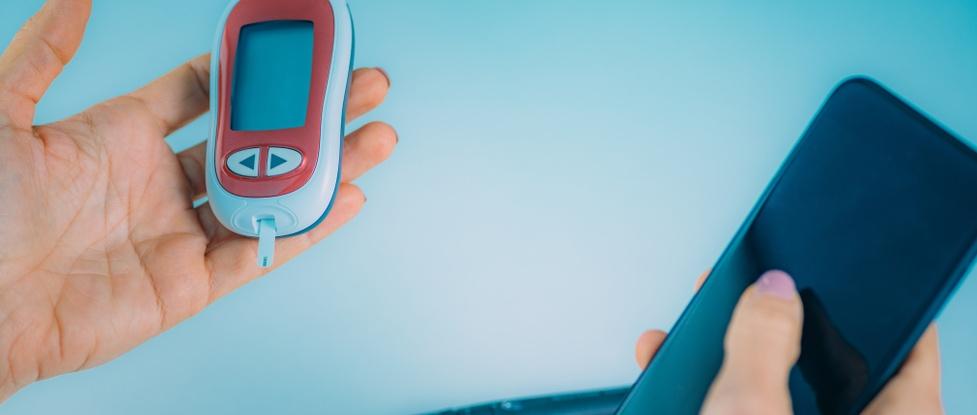
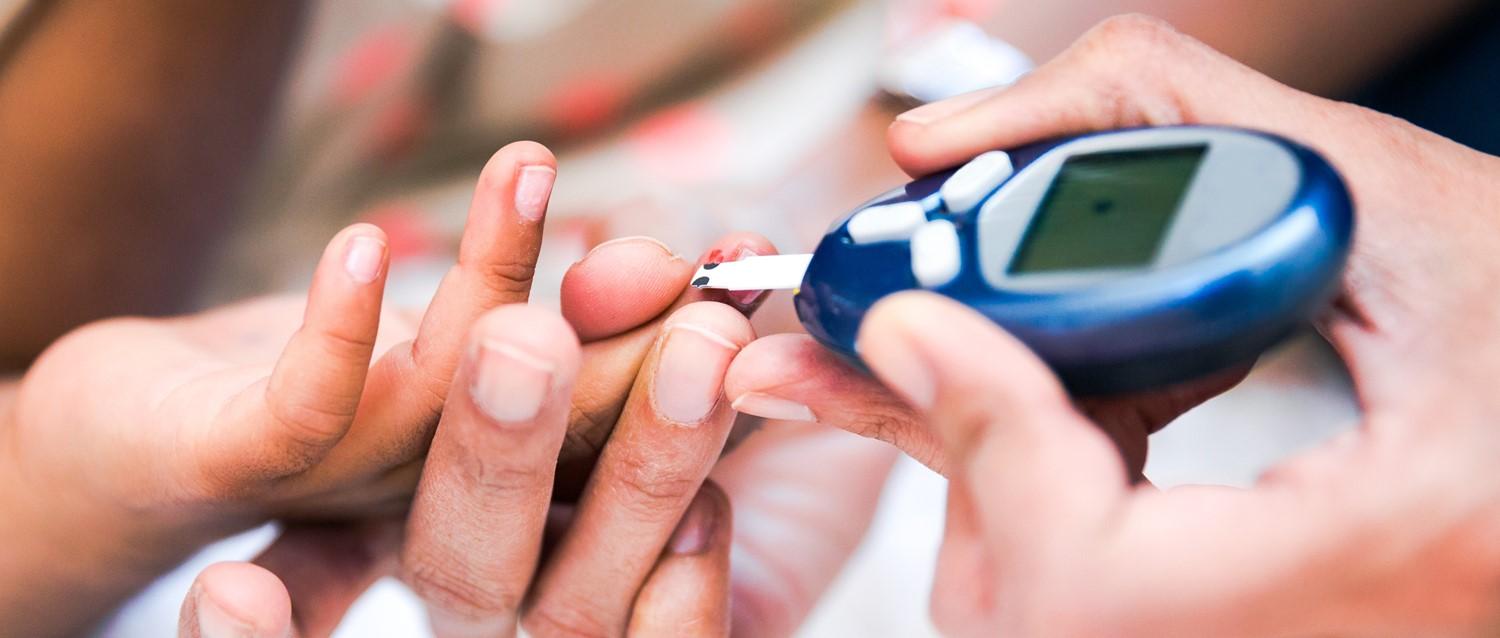
Monitoring your blood sugar (glucose) level is a key part of managing diabetes. The two main pieces of technology to help are blood glucose meters and CGMs.
Both come in simple to advanced options, with a range of features. Some devices let you download your readings to help you monitor any changes. They are usually waterproof and should have little interference with your day-to-day life.
CGM
A CGM is a small sensor that sits under your skin, which reads your blood sugar levels without having to prick your fingers. Your readings can then be sent and stored on your mobile phone.
CGMs give real-time blood sugar readings and alert you when they are high or low. Folsom says CGMs have reduced the guesswork in managing diabetes and give you more freedom and peace of mind.
CGMs are particularly helpful if:
You have difficulty staying within your target blood sugar ranges.
Your blood sugar gets low without any symptoms.
You would like to reduce the frequency and number of finger pricks.
CGMs may not be right for you because:
They are sometimes not as accurate as a finger prick.
They give you a lot of data - which may be overwhelming.
You might not like wearing one.
The alarms might annoy you or wake you up.
Watch this space
Sound wave-based insulin management is being developed to measure insulin delivery, which will speed up detection of any blockages and allow more precise dosing. Controlled by your phone or smart watch, it’s designed to integrate with CGMs.
Continue reading below
Technology for insulin delivery
Technology such as insulin pumps and pens can take away the effort of regular injections and ensure you get precise doses.
Insulin pumps
Insulin pumps are small devices which deliver insulin through a thin tube fitted under your skin (infusion set). The pumps are designed to replicate how your body would naturally release insulin - delivering it steadily throughout the day (basal) and in quick bursts around meals (bolus).
You can switch between a pump and injections depending on what works best for you.
To use a pump safely, you must check your blood sugar regularly to make sure it’s working properly.
Folsom says: “Insulin pumps have removed the need for multiple daily injections to real-time tracking and automated insulin delivery.”
Insulin pumps may suit you best if you:
Exercise regularly, as you can easily adjust your doses.
Have frequent low blood sugar levels.
Want help calculating the correct doses.
Do not want to inject as much.
Insulin pumps may not be right for you because:
They give you a lot of data - which may be overwhelming.
You might not like wearing it.
It takes time to learn how to use it properly.
There is a risk that the tubing can get blocked or become unattached, which could lead to high blood sugar levels and infection from the cannula.
Watch this space
It may not be too long till this technology has even more benefits. Folsom expects camera-based apps that accurately analyse your meals and then feeds that data directly into your pump - minimising user error and making dosing even more precise.
Smart insulin pen
A smart insulin - or connected - pen is a reusable injector pen that automatically records when and how much insulin you have injected. A smart pen gives you many of the features of an insulin pump, but without having to attach a device to your body.
The smart pen connects to an app on your phone and gives you reminders, alerts, and reports.
As the pen tracks your injections, you have less chance of missing or doubling up on an insulin dose. The information gathered is also useful when you are speaking to your healthcare team.
Other benefits from a smart insulin pen include:
Calculating each insulin dose based on blood sugar levels, carbohydrate amounts, meal size, active insulin, and what has been advised by your healthcare team.
Letting you know if your insulin has gone past its use by date or has been stored incorrectly.
Linking with other apps.
Hybrid closed-loop systems
A hybrid closed-loop systems lets your insulin pump use the information from your CGM sensor to suggest the most appropriate dose.
Folsom explains that hybrid systems use algorithms to customise your insulin dose to your specific needs and predicted blood sugar values.
Watch this space
There are more advancements to come in this area of technology. Artificial Intelligence (AI) is one area that will bring improvements. Fosom says AI will help address challenges such as carb counting - one of the biggest barriers for children and teens managing their diabetes effectively.
Apps for diabetes
There are many apps which can help you manage your diabetes. Some are specifically designed for diabetes, others are more general - such as those which help with managing your weight or exercise.
Here are some other apps available to help you manage diabetes:
Digibete NHS-approved app and website gives children and young people with T1D and their families a wide range of awareness, education, training, and support resources.
mySugr - tracks blood sugar, meals, insulin, and estimates blood sugar levels.
Glucose Buddy - logs glucose, medicines, meals, and exercise - useful for generating reports.
One Drop - Offers glucose tracking, medicine reminders, and access to coaching and health information.
Gluroo - allows real-time blood sugar levels sharing and includes food logging and reminders.
BlueLoop - designed for children and families to track insulin, carbs, and to communicate with care teams.
Health2Sync - monitors blood sugar level information and has coaching and emotional support features.
Fooducate - scans food barcodes to assess sugar and carb content.
Carb Manager - helps track carbs, calories, and macronutrients with meal plans and diabetes-friendly recipes.
Digibete, Gluroo, and BlueLoop offer totally free services - the others are free to use but charge extra fees for enhancements and additional services.
This is just a selection of the many apps that are available. Explore these and find others to see what is best for you - and ask your healthcare team for recommendations.
Continue reading below
What tech is right for me?
Knowing what tech is best for you is not straightforward - and there is no one-size-fits-all solution. A good starting point is to ask yourself what suits your lifestyle, what you want to achieve, and how you feel generally about using tech in your day-to-day life.
There’s also the question of cost. Some tech is available for free - on the NHS in the UK or included in your insurance in the US or Australia - but there are eligibility criteria. Folsom says: “Cost or eligibility, comfort with technology, and how much responsibility you want should all factor into your choice.”
Here are some things to consider when choosing your diabetes technology:
How active are you? Would a device annoy you when exercising, do you need it to be waterproof?
How much control do you want? Smart pens and CGMs leave you with some control, whilst hybrid closed-loop systems do more of the work for you.
Are you tech-savvy? Are you confident linking to apps? Do you find it easy to learn how to use it?
Do you want to share your data? Giving easy access to your family or healthcare team.
The best place to get trustworthy and accurate advice is from your healthcare team. They can talk you through cost and eligibility and see what device best suits your medical needs and lifestyle. They can also give you training and guidance on using it effectively.
Diabetes support groups and forums may also offer the chance to hear from people who are using the technology already.
With all this in mind, make sure you are happy and confident in whatever you use, Dhar says: “You need to trust your platform to use your data responsibly and offer you good advice.”
Is diabetes tech right for me?
Like managing your condition, getting the most from diabetes tech requires effort, application, and understanding. This can add further stress to an already difficult situation.
Using technology also means being prepared for the amount of information that your devices will be gathering. Then there are the alarms and alerts that might be coming your way - not to mention having a device attached to your body.
It’s important that you are happy to use new technology – and not pressurised into adopting change. Folsom says: “Don’t feel like you need to rush to buy every new device, or download every new app. It can feel overwhelming if you think you must use every feature right away.’”
You must be mentally ready to adjust your routines and learn new techniques. And once you start to use your tech, take it gradually to learn the ropes. Folsom says that at the start, it’s useful to concentrate on the basics, such as setting alerts on your CGM or learning how to upload data to share with your healthcare team.
Talk to your healthcare team about what device, if any at all, is best for you and any worries you may have. They can support you through teething difficulties or any extra stress you are feeling. And go easy on yourself if you are having difficulties, as Folsom says, “Give yourself time. Learning new technology gets easier with practice.”
Old fashioned pen and paper
And if you are not happy with technology, do not feel pressured into using it. Old-fashioned pen and paper will not run out of power, and if it works for you, then keep writing.
“For some, jotting down numbers or meal notes is simpler and less stressful than navigating an app. This technique can also be a helpful backup if technology fails or if you want to see your progress in a more tangible, straightforward way,” says Folsom.
Patient picks for Diabetes mellitus

Diabetes
Telling your date about your diabetes
Whether you’re newly diagnosed with diabetes or have been living with the condition for years, when and how to tell a new partner about your diabetes can be scary prospect.
by Danny Chadburn
Diabetes
Why low blood sugar is dangerous
Hypoglycaemia, or low blood sugar, is often known as a 'hypo'. It can make you feel unwell and affect your ability to drive. Simple steps will reduce the risk, and allow you to treat a hypo early, before it causes more serious complications.
by Dr Sarah Jarvis MBE, FRCGP
Continue reading below
Article history
The information on this page is peer reviewed by qualified clinicians.
Next review due: 17 Dec 2028
17 Dec 2025 | Originally published
Authored by:
Lawrence HigginsPeer reviewed by
Dr Colin Tidy, MRCGP

Ask, share, connect.
Browse discussions, ask questions, and share experiences across hundreds of health topics.

Feeling unwell?
Assess your symptoms online for free
Sign up to the Patient newsletter
Your weekly dose of clear, trustworthy health advice - written to help you feel informed, confident and in control.
By subscribing you accept our Privacy Policy. You can unsubscribe at any time. We never sell your data.